DAMAC Properties
Agent & Buyer Experience
Year
May 2025 – September 2025
Discipline
Product Design, UX Research, AI Design
Industry
Real Estate, Luxury, PropTech
Overview
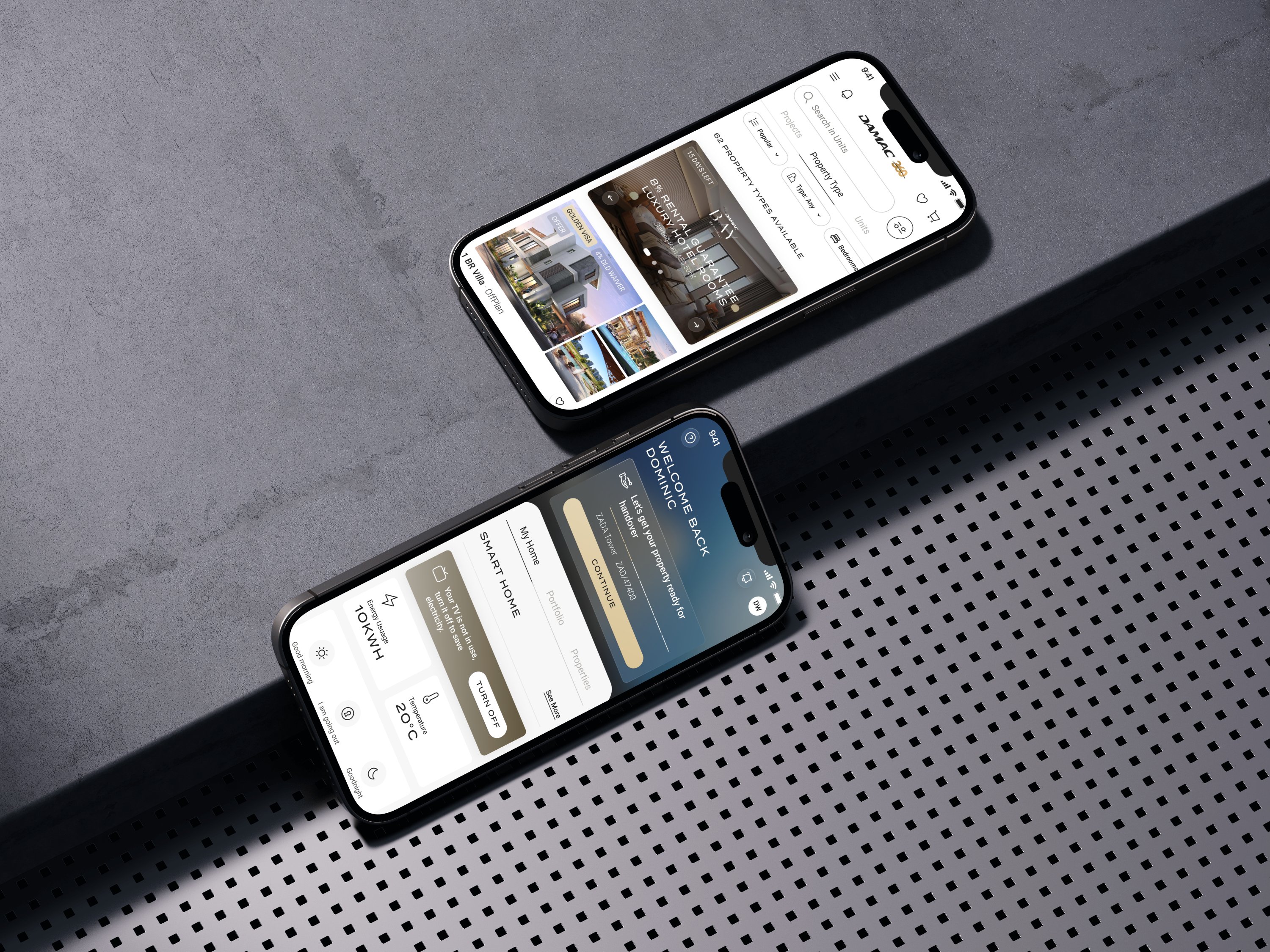
DAMAC Properties is a globally recognized Emirati luxury property developer based in Dubai, UAE. The engagement focused on extending the look and feel of their recently redesigned public-facing sales portal into two existing internal applications, one for sales agents, one for property owners, completing the full lifecycle of purchasing and owning a DAMAC property. The work covered everything from browsing and bidding on properties to managing a home, booking amenities, and monitoring an investment remotely through AI-assisted tools.
My Role
Design Lead, managed two teams of two designers, each dedicated to a separate product track: the agent portal and the owner portal. Traveled to Dubai early in the project to build a direct relationship with the client and conduct stakeholder interviews on the ground. Ran daily client meetings to manage expectations, gather feedback, and route it to the design teams. Balanced client management with pushing the teams to move fast on a tight timeline, and had direct conversations with the client about issues in their existing platform that needed to be addressed, even when that was not what they wanted to hear.
Problem
Research surfaced two distinct problems across the two platforms. On the agent side, knowledge gaps were pervasive. Agents, both internal DAMAC staff and external, had limited understanding of the platform's full feature set. Training was delivered via video with no consistency or retention mechanism. On the owner side, adoption of the portal was low. Most owners were making payments through the help center rather than the app. Booking amenities was cumbersome and unclear. The information architecture did not reflect how people actually used the product, and there was no clear path to the most critical tasks.
Solution
Started with a research phase comprising upward of 20 stakeholder and owner interviews. Brought those findings to the client and made the case for what needed to change, including difficult conversations about the existing platform's shortcomings. Once aligned, the work split into two tracks.
For agents, we redesigned the platform to close knowledge gaps and introduced a contextual help layer, an AI-powered assist that surfaces guidance in the moment, when and where an agent needs it, without pulling them out of their flow. This included supporting the fast-paced bidding process on launch days, where agents manage competitive offers on highly sought-after properties in real time.
For owners, we restructured the information architecture to surface the most important actions clearly and upfront. Payment flows were simplified significantly. Amenity booking was redesigned and connected to a map picker, helping owners orient themselves within their community, some of which are large enough that geography matters. We also designed for a range of owner personas, from residents owning a single home to investors managing multiple rental properties, and introduced a priority layer so each user type sees what they need to act on first. AI was integrated as a natural part of the experience, owners can schedule pool time, request maintenance, and manage visitor access through a simple prompt. Connected system alerts notify owners of issues at their property even when they are not there.
Across both platforms, we built an AI signature framework, a consistent design language for any moment where AI is generating a recommendation, answering a question, or guiding a user through a flow. It makes the presence of AI clear and the interaction intuitive, without overpromising what AI can do.
Outcome
Delivered near-complete flows for both applications across mobile and desktop, with tablet views for select screens, significantly beyond the original scope of key screens only. Designs were built as an extension of DAMAC's existing design system and the visual language of their public-facing site, creating a coherent brand experience across the full purchase and ownership lifecycle. The AI signature framework established a reusable, scalable pattern for AI interaction across both products.
What I'm Proud Of
The AI thinking. Rather than treating AI as a solution to everything, we identified specific, practical moments where it adds real value and started small. That approach builds a usable data set over time and earns user trust incrementally. It is not about being ambitious, it is about being right.